


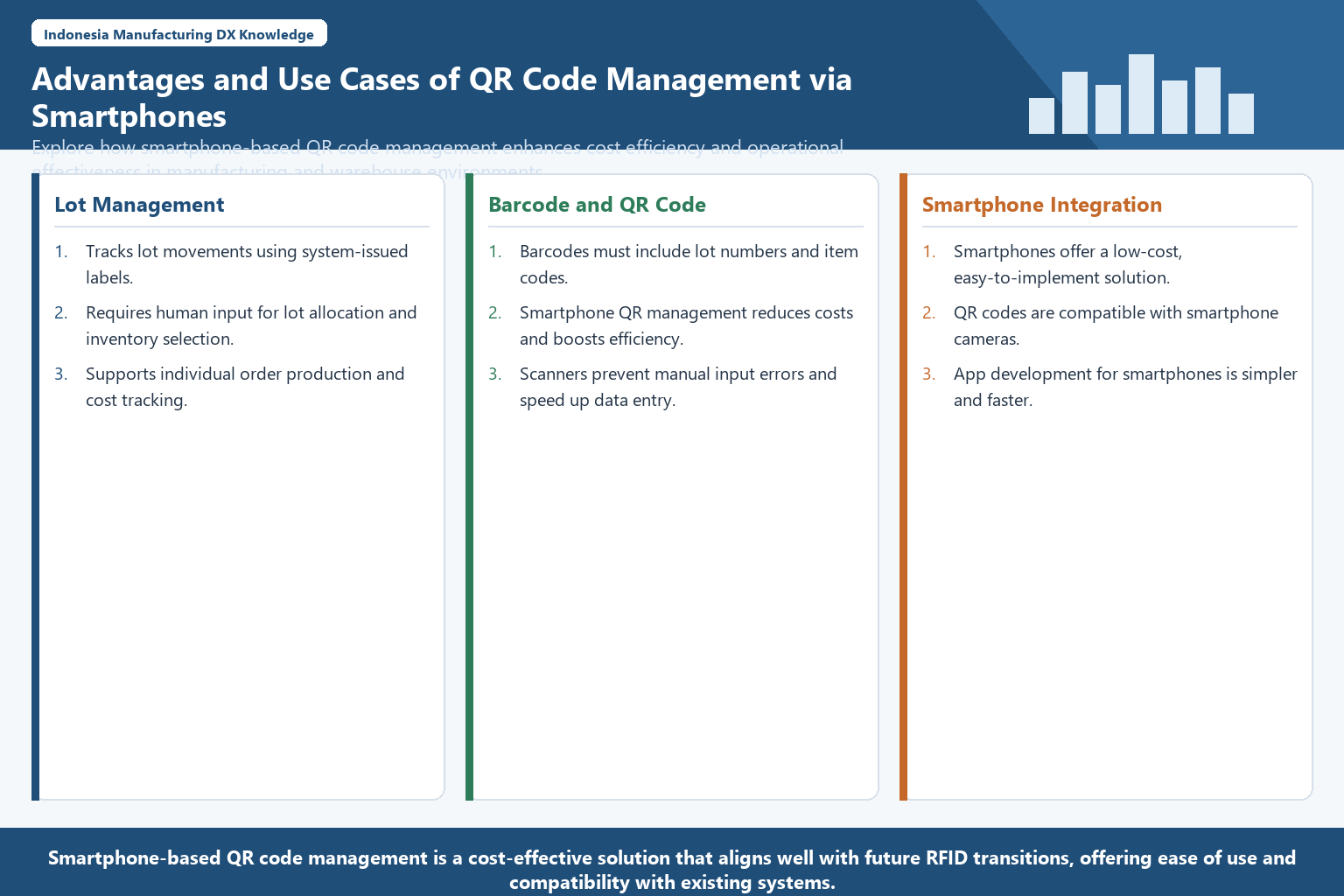
In the development and implementation of business systems, data collection through barcode and QR code scanning is common. Our company recommends QR code management via smartphones to customers considering on-site terminals in manufacturing and warehouse environments.
-
-
Production Management Systems in Indonesia
The ultimate goal in manufacturing is to improve productivity and meet delivery deadlines. Understanding the differences between manufacturing cost, cost of…
続きを見る
What this article covers
- Lot management systems use physical tickets to input results by lot number.
- Serial number management is suitable for make-to-order production, improving material tracking and cost management.
- Barcodes must include lot numbers and item codes, but not location information.
- QR code management via smartphones contributes to cost reduction and efficiency.
- Handheld terminals develop apps with proprietary scripts and exchange data via CSV.
Overview of Lot Management
The main function of a lot management system is to record the movement of physical lots in the system. To achieve this, a physical ticket issued by the system must be attached to the lot, and every time the physical item moves, the lot number must be entered into the system as a record. This ticket serves to link the system and the physical item by lot number.
In a lot management system, human awareness is required to "allocate" the input lot when issuing a manufacturing order or to "select inventory" when recording production results. While it is possible to automatically deduct input items based on the BOM (Bill of Materials) using FIFO (First-In, First-Out), it is unlikely that physical items will be input exactly as the system dictates.
The ultimate lot management is serial number management. By assigning a serial number from the time of material purchase request, the material is received into inventory with a serial number upon arrival, and the correct material is allocated by specifying the serial number in the manufacturing order. The serial number follows the product until it is completed, making it suitable for make-to-order production. Cost understanding is also performed on a serial number basis through individual cost calculation.
Purpose of Lot Management
The purpose of lot management is to effectively utilize information in factory management. Even if lot management is performed in the system, it is meaningless if the information is not utilized.
Lot Traceability
When a defective product is discovered, tracing in the system identifies the problematic lot and its impact range, limiting the recall target and reducing the risk of total product recall. The ability to trace history provides "peace of mind" to customers and business partners. However, this is only possible if the system records are entered in accordance with the physical movement and the system matches the physical items.
Maintaining Inventory Management Accuracy
Discrepancies between system quantities and actual quantities due to measurement errors or losses during production management system record entry can be managed on a lot basis. By recording results on a lot basis, it is possible to check "how many items are in this lot" for each flow destination. This is equivalent to constantly checking the theoretical value of the entire inventory by dividing roles for each flow destination.
While real-time record entry is ideal, in reality, processes that reflect the next day (night shifts or weekend work) and processes that reflect in real-time (shipping processes) coexist. When lot management is performed in the system, lot quantities are overwritten by the result quantities of subsequent processes, converging to more accurate quantities as they progress through subsequent processes.
Barcode Format and Lot Number
Barcodes are usually printed on box labels or physical tickets, and it is important to decide what information to include in the format when managing with barcodes. The lot number is essential, and it is necessary to consider whether the information required to register as a record in the system can be obtained from the barcode itself or by using the lot number as a key.
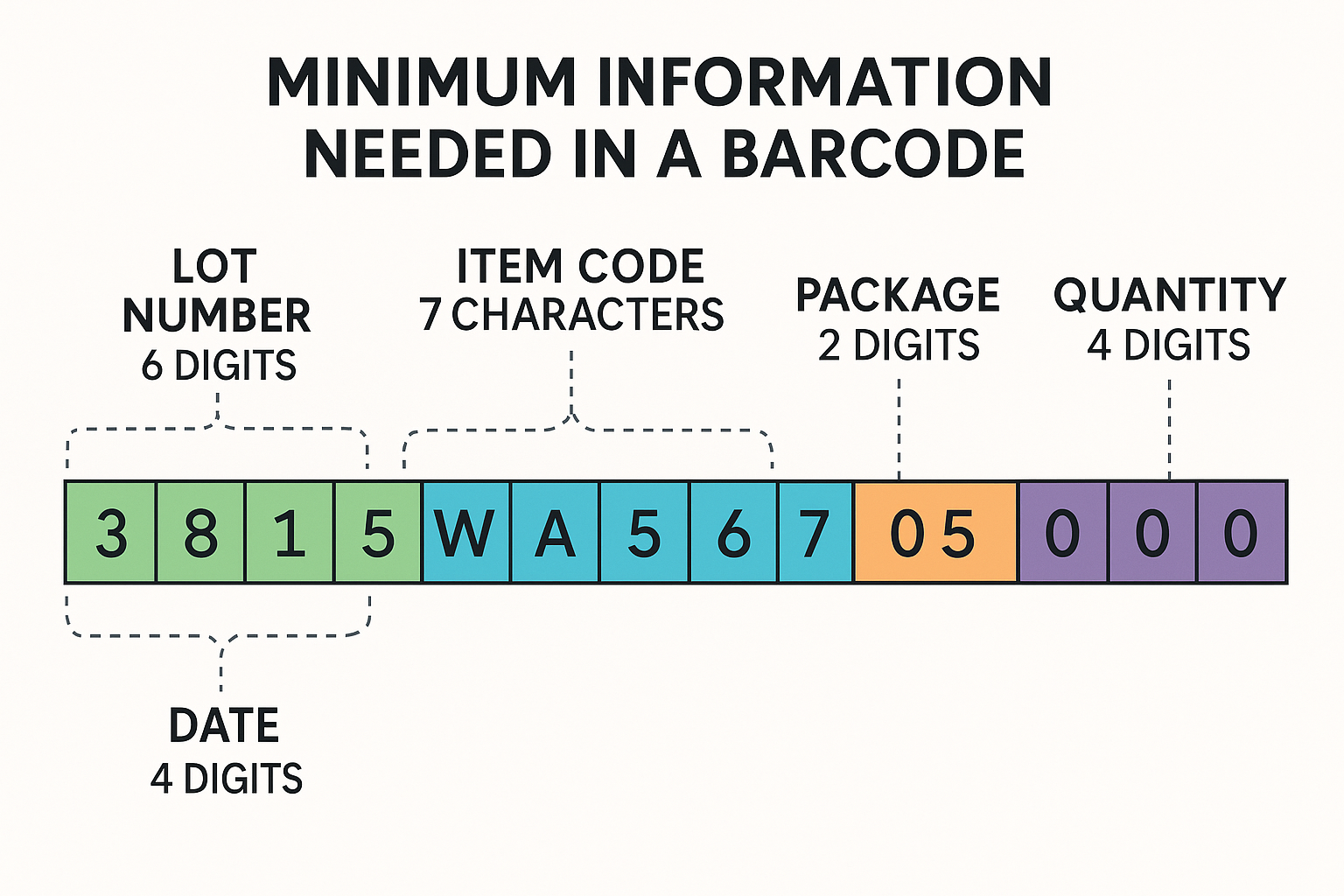
In inventory management systems based on location, the item code is the key, but when lot management such as FIFO is required, at least the lot number and item code are necessary in the barcode. Location information is not included in the barcode on the physical ticket because it changes with the flow destination. The lot number consists of "date + serial number," and if management down to the packaging level is desired, a packaging number is required. To reduce the effort of quantity entry during barcode scanning, the number of items per package is also necessary.
Lot Management with Barcodes
The basic operation on the shop floor is FIFO (First-In, First-Out), but whether to manage this in the system is another issue. Implementing FIFO in an inventory management system is possible, but it requires the input personnel to select the correct lot during receipt and issue, increasing operational burden.
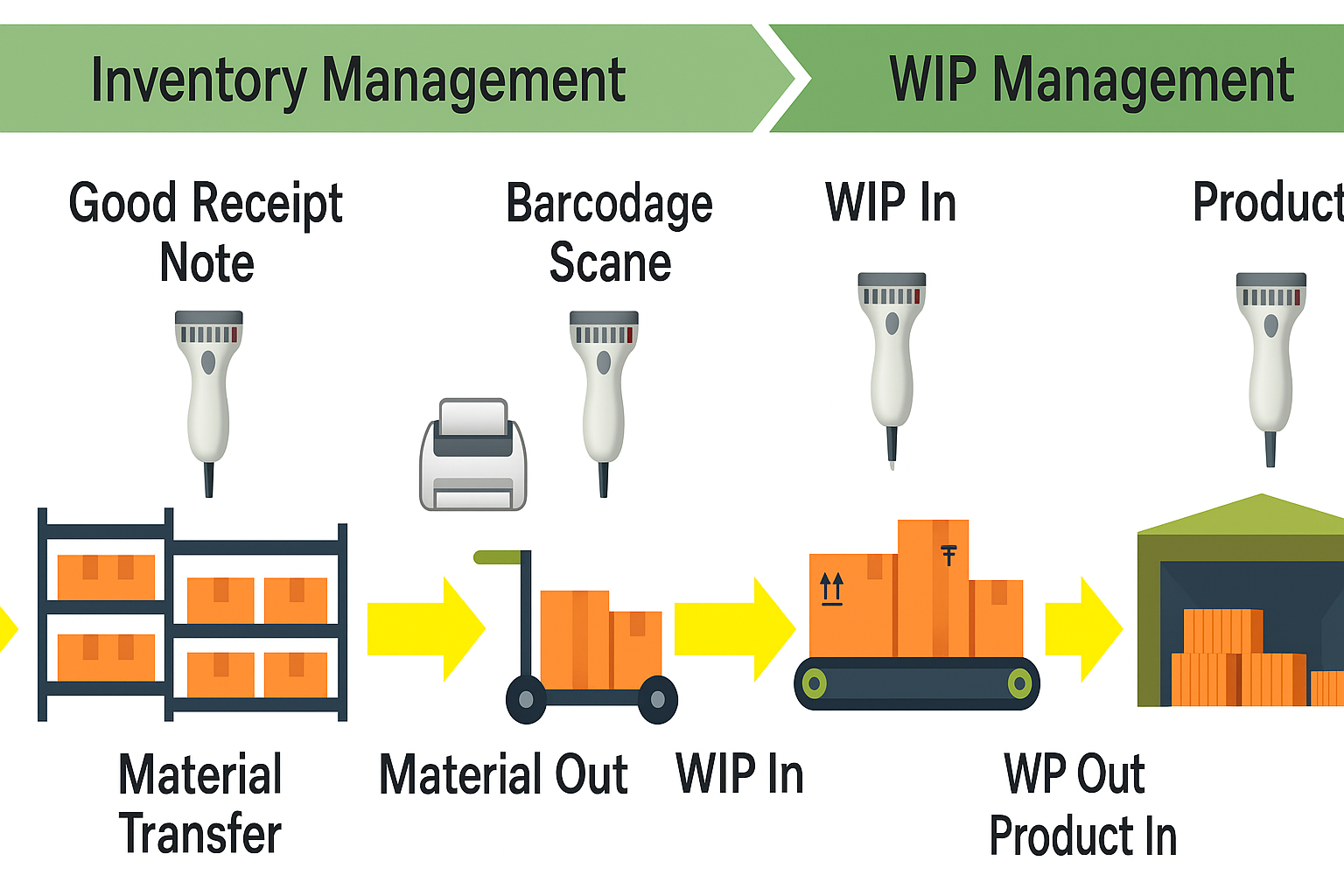
Receiving (Material IN)
Upon receipt, physical tickets are issued for each package, scanned, and processed for receipt. If all physical tickets for the same lot are the same, inventory is managed by "item code - lot number," and if management by package is necessary, it becomes "item code - lot number - package number." If shelf number management is performed, the shelf number must be entered or scanned at the time of receipt.
After scanning the physical ticket of the package upon receipt, scan from the barcode list of shelf numbers or scan the barcode attached to the physical location of the shelf number to complete the receipt. In this case, inventory quantities are managed by "item code - lot number - package - shelf number."
Material Issue (Material TRANSFER)
Scan the physical ticket of the material lot and move the material from the material warehouse to the shop floor material storage. If the issue quantity is not keyed in during barcode scanning, the default number of items per package is moved to the shop floor material storage.
Material Input (Material OUT)
If the input material is incorrect for the manufacturing order, an alert is displayed to prevent incorrect input. If the remaining items of a package are returned to the material warehouse, the remaining quantity is keyed in during barcode scanning.
Initial Process Manufacturing Record Entry (Work-in-Process IN)
Scan the barcode of the physical ticket to add to the work-in-process inventory quantity. If the receipt quantity is not keyed in, the default number of items per package is received.
Work-in-Process Inventory Transfer (Work-in-Process OUT Product IN)
Scan the physical ticket to deduct the work-in-process and move it to the product warehouse. If the issue quantity is not keyed in, the default number of items per package is issued.
Issue Shipping Instructions
Change the inventory status to allocated quantity for the scheduled shipping quantity.
Shipping (Product OUT)
Scan the physical ticket to deduct the product. If a physical ticket that does not match the shipping instructions is scanned, an alert is displayed.
Barcode Reader (Scanner)
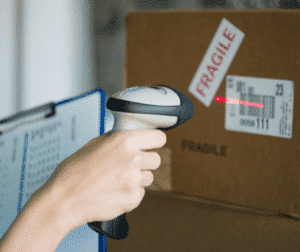
The role of a barcode reader is to scan barcodes and capture data, reducing the need for manual keyboard input and preventing input errors. For example, when reading the "Order NO" on an order sheet, it quickly and accurately inputs the Order NO into the search field, and the business system displays the order information. The operator inputs and updates the result information from the screen.
Similarly, when reading the "Item Code + Lot NO" on a physical ticket, inventory information is displayed on the screen, and the operator inputs and updates the result information. In operations using a barcode reader, the main actors change as follows:
- Barcode Reader (the main actor reading key information)
- PC-side application (the main actor displaying information from the database based on the key)
- Operator (the main actor inputting results)
- PC-side application (the main actor saving result information to the database)
Whether the barcode is recognized is confirmed by a beep sound, but whether the data is correctly captured is determined by the PC-side application. Therefore, it is assumed to be used within a visible distance of the PC monitor.
Case Study: At the MM2100 factory, a Cipher Lab Bluetooth scanner was introduced, but there was a dilemma that data could not be confirmed if the PC screen was too far away.
Key Point: Even with a Bluetooth scanner, if the PC screen is far from the physical location, it becomes a constraint in operation as the reading results cannot be confirmed.
Handheld Terminal
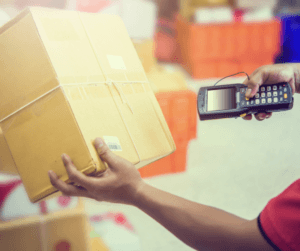
- Create receipt and issue order information on the PC-side business system.
- Process order information through an interface and transfer it to the handheld terminal.
- Distribute orders on-site, and the Order NO is barcoded.
- On-site personnel scan the Order NO, scan the barcode of the physical label (item code + lot NO), and key in the quantity.
- If the item code and lot NO exist in the relevant order, it is OK; if not, it is NG (there is also a master check on the handheld side).
- After completion, import the receipt and issue results into the interface, process them into the business system's result format, transfer them, and record the results.
The purpose of the handheld terminal is to check whether the barcode information on the physical label matches the information accumulated in the handheld. The following functions need to be implemented:
- Menu function to select work types such as receipt, shipment, and inventory
- Function to select relevant order information using Order NO as a key
- Menu function to select locations and shelves
- Check function to see if the barcode information of the physical item matches the order information
Additionally, an interface is required for format conversion when importing order information into the handheld terminal and when importing result information into the business system, as well as for recording results.
Wireless Handheld Terminal
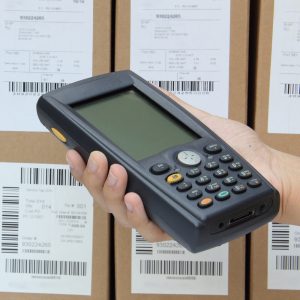
- Directly reference the server database from a Windows app developed for handheld use.
- Based on scanned data, it is possible to raise results in the business system from the Windows app for handheld use without an interface.
Applications for wireless handheld terminals can be developed with the same sense as regular Windows app development.
Which to Choose: Scanner, Handheld Terminal, or Wireless Handheld Terminal?
In Japanese warehouses, inventory management using barcodes is common, but many Japanese companies in Indonesia are still in the consideration stage. Devices for reading barcodes include scanners that connect to a PC via cable or pair with Bluetooth, handheld terminals that transfer data in batches, and wireless handheld terminals equipped with an OS such as Windows CE. The criteria for deciding which device to choose are as follows:
- Scanner
- Inexpensive and easy to introduce, but positioned as a substitute for keyboard input.
- Assumes work is done near the PC.
- The purpose is to easily and accurately obtain key information, with other information obtained by the PC-side app.
- Handheld Terminal
- Inexpensive, but requires program development with proprietary development tools like Basic or VBScript-like languages.
- Assumes use in large warehouses or on-site.
- Basic interaction with the PC-side app is through CSV files.
- Wireless Handheld Terminal
- Expensive, but allows for terminal app development with the same sense as regular PC development.
- Assumes the use of wireless LAN on-site.
- Can directly write to the server database.
Batch-type handheld terminals are often chosen because "scanners connected to a PC do not allow for free work on-site, and wireless handhelds are too expensive." However, two developments are required: a menu-based app for performing receipt and issue or inventory work on the handheld terminal side, and a PC-side app that connects data to the core system. Commercially available handheld terminals come with proprietary app development tools.
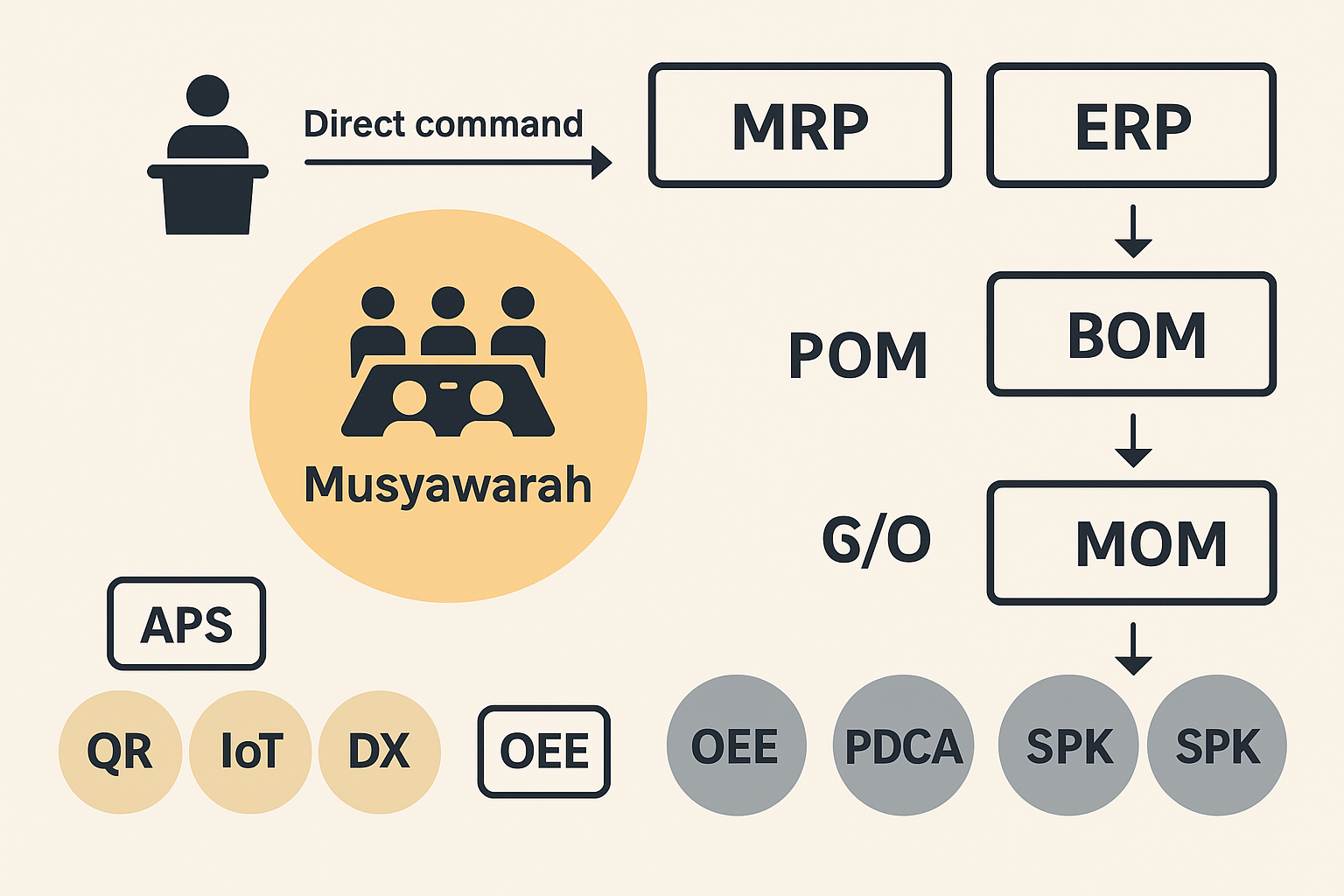
Methods for Recording Results in Core Systems
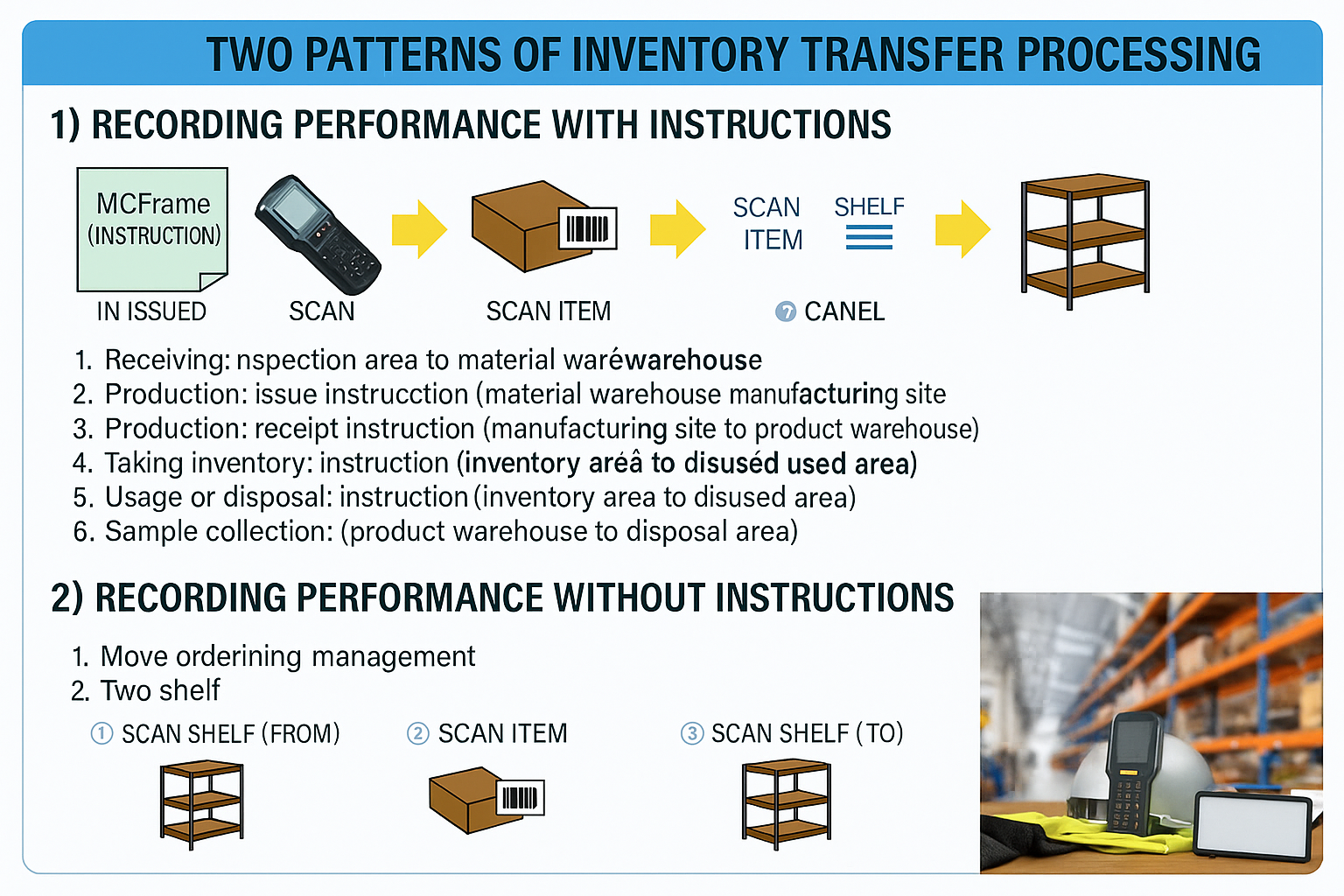
There is a method of using batch-type handheld terminals for recording results in core systems, with two cases: obtaining results based on orders and obtaining results by scanning physical items without orders. In the method based on orders, results are linked to the core system after confirming that physical items are scanned according to orders issued by the core system.
- Receipt: From the uninspected area to the material warehouseAttach physical ticket upon inspection approval
- Material Issue (Issue Order): From the material warehouse to the manufacturing site
- Material Return: From the manufacturing site to the material warehouse
- Product Receipt: From the manufacturing site to the product warehouseAttach physical ticket upon inspection approval
- Shipment (Picking List): From the product warehouse to the shipping area
- Disposal: From the warehouse to the disposal area
- Inventory (Inventory List): Warehouse
Reflecting results without orders in the core system
- Shelf Movement: Move from shelf to shelf
App Development on the Handheld Terminal Side
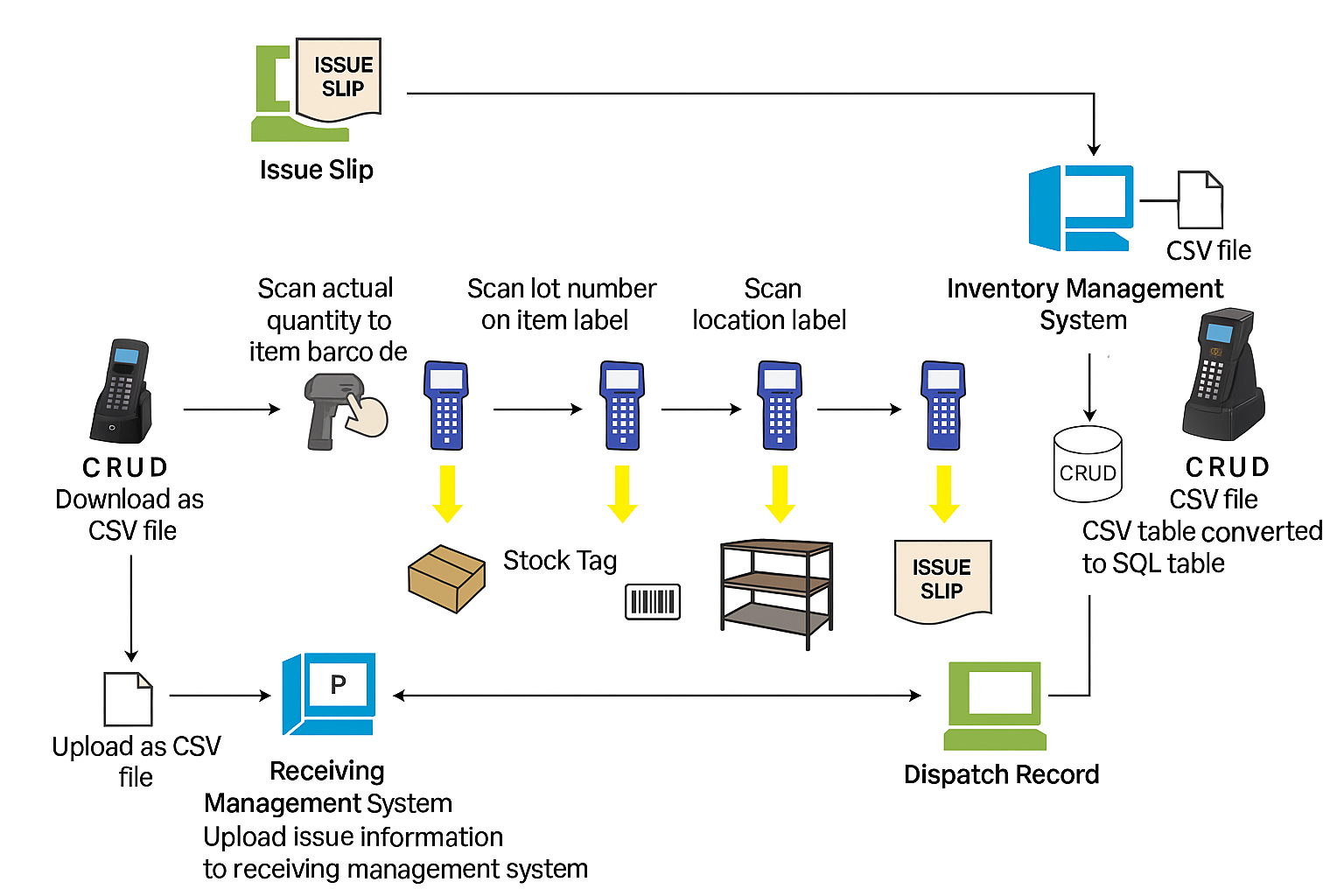
In handheld terminals, apps for performing receipt and issue work in warehouses are developed using manufacturer-provided proprietary scripts (Basic or VBScript-like languages) based on menus, buttons, and text boxes.
For the database that stores order information and master data from the core system on the handheld side, it is common to use SQLLite, which is free, lightweight (core is only 225KB), and supports all basic SQL statements. It is also compatible with CSV files, and development proceeds while checking operation on a PC emulator.
Case Study: The left diagram shows a flow using a handheld to correctly issue materials from the material warehouse to the manufacturing site based on manufacturing orders. The Order NO printed on the header of the order issued by the core system is scanned, and it is checked whether the relevant lot of items is being issued from the relevant warehouse shelf. A function is implemented to allow for a tolerance range for discrepancies in result quantities and to display errors or alerts.
Key Point: Match Order NO and lot with the handheld, and set a tolerance range for quantity discrepancies to prevent incorrect issuance.
When using CSV files with handheld terminals, the following four data conversions occur:
- Convert from the DB of the receipt and issue management system to a CSV file and upload to the handheld
- Import the CSV file into SQLLite on the handheld
- Convert from SQLLite to a CSV file on the handheld and download
- Import into the DB of the receipt and issue management system
When scanning the shelf number barcode on the rack label attached to the shelf, the source shelf number is read first in issue processes such as material issue or shipment, and the destination shelf number is read last in receipt processes such as receipt or product receipt.
Benefits of Introducing QR Code Management via Smartphones in Business Systems
In Indonesia's smartphone payment market, OVO, which collaborates with Grab and Tokopedia, GOPAY, the standard e-wallet of the Gojek app, and DANA are competing for market share.
These services adopt a method where QR codes printed on restaurant cash registers or receipts are scanned with a smartphone, and the charged amount within the app is deducted, offering discounts and point rebates. Due to this background, smartphone payments have rapidly spread in Indonesia.
In the field of business system development and implementation, data collection through barcode and QR code scanning is also conducted. Our company recommends QR code management via smartphones to customers considering the introduction of on-site terminals in manufacturing and warehouse environments for the following reasons:
Easy and Low-Cost Introduction
Since everyone has a smartphone, there is no need to purchase expensive scanners or handheld terminals. By simply implementing the function to read QR codes and reflect them in the business system, it can be introduced easily and in a short period.
Reluctance to Make Significant Investments in Legacy Technology During the Transition to RFID
It is expected that RFID methods will eventually replace barcode and QR code scanning in Indonesian manufacturing sites. Using Android smartphones as on-site terminals is more cost-effective than purchasing separate reading terminals for barcode or QR code scanning.
QR Codes Are Well-Suited for Smartphones
Smartphone cameras are better at recognizing QR codes, and label sizes can be kept small. QR codes can be read sufficiently with an inexpensive Android smartphone, even with a large number of digits. For Indonesian workers accustomed to smartphone payments, QR code scanning is not a burden.
Easy Development of Smartphone Apps
App development for handheld terminals requires C language or dedicated scripts, but Android app development for smartphones can be done quickly with PhoneGap + HTML + jQuery to create business-specific apps. If the business system's UI is a responsive web screen, there is no need to develop a dedicated smartphone app.
Image of Registering Data in Business Systems by Scanning QR Codes with Smartphones
The video on the left demonstrates the completion of the receipt process by pressing the "QR Code Scan Button" from the receipt processing screen, activating the camera, and scanning the QR code attached to the item. The number of records increases from two to three by scanning a new QR code from the receipt processing screen with two registered records. It is possible to automatically register at the time of scanning or to register multiple records collectively with continuous scanning.
Since the screen UI of our business system development template Hana First is a responsive web screen, there is no need to develop a separate smartphone app, but Android apps for receipt and issue processing, inventory processing, etc., can be developed quickly using PhoneGap + HTML + jQuery.
Scenarios where QR code scanning is assumed to register results in the business system include material receipt processing, material issue processing, product receipt processing, disposal processing, and shipment (picking) processing.
Frequently Asked Questions | Smartphone QR and Lot Management
Questions that repeatedly arise in terminal selection and lot management are organized according to the content of this article.
Why Recommend Smartphone QR Over Dedicated Handhelds?
Because it allows for a quick start with minimal terminal purchase, serving as a bridge until future RFID transition. QR is well-suited for camera recognition, and if the business screen is responsive, a dedicated app may not even be necessary.
What Information Is Essential for Barcodes?
In lot management, the lot number and item code are basic. Location is not included in the physical ticket as it changes with the flow destination, and packaging number and quantity per package may be added for packaging management and to omit quantity input.
What Is the Difference Between Scanners and Batch-Type Handhelds?
Scanners are primarily for substituting key input near the PC. Batch-type handhelds are for large sites but require development of both terminal apps and core integration, while wireless handhelds, though expensive, facilitate real-time processing.