
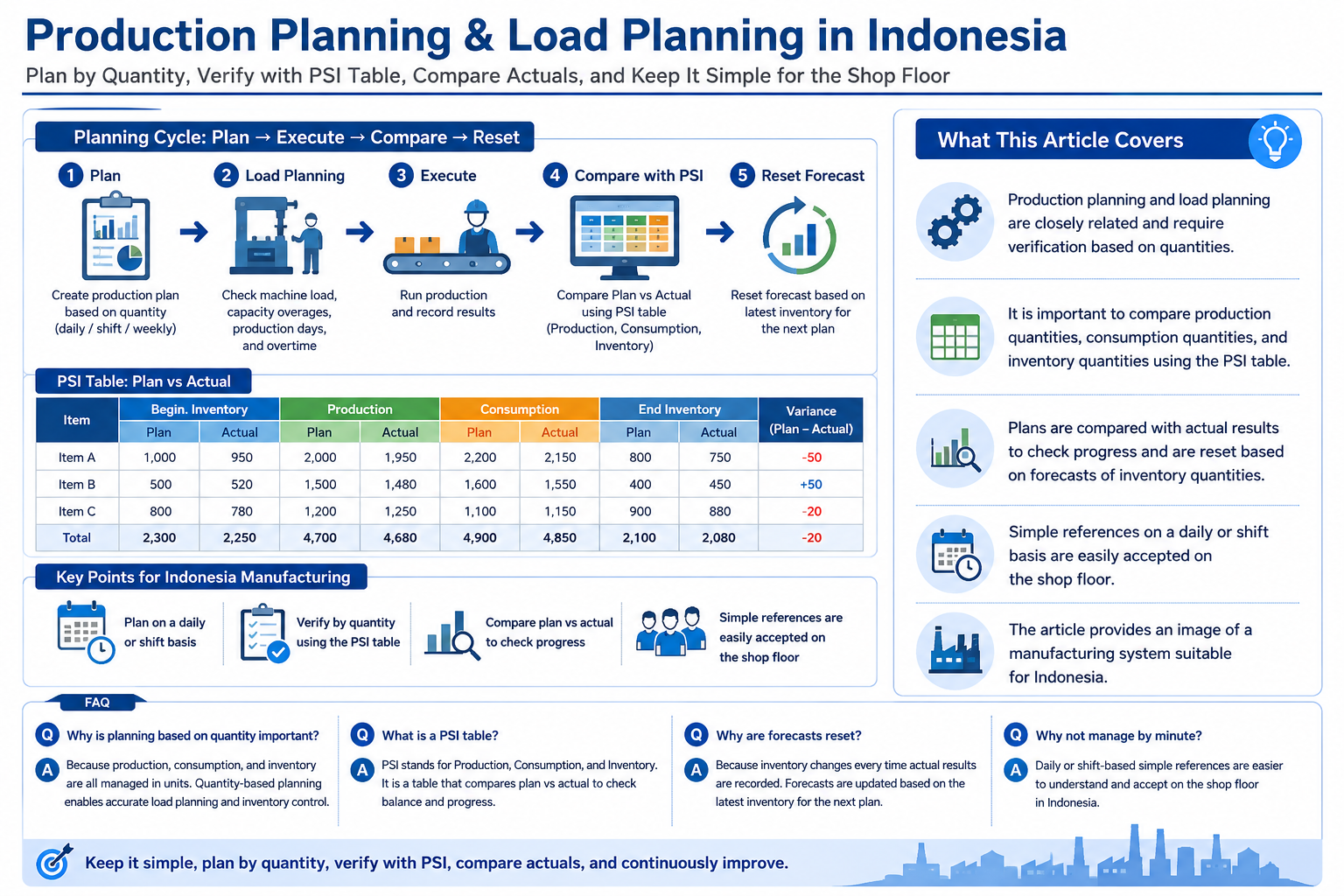
In the assembly mass production factories of the two-wheeler and four-wheeler industry in Indonesia, production planning and load planning are closely related. Since production planning is formulated based on quantity, there is a need to confirm load planning on a quantity basis for each machine. Generally, planning is required on a daily or shift basis.
Planners consider the number of productions on machines, production days for capacity overages, and necessary overtime hours. To support this, it is important to verify production quantities, consumption quantities, and inventory quantities in comparison using the PSI table.
It is crucial to compare plans with actual results to confirm progress. When creating a weekly plan, quantities are forecasts based on current inventory, and inventory quantities change each time production results are entered. At the time of the next plan creation, forecasts are reset based on the latest inventory quantities.
In the systemization of planning operations in Indonesia, it is considered that simple references corresponding to production results on a daily or shift basis are more easily accepted on the shop floor than minute-by-minute schedule management.
This blog provides articles offering an image of manufacturing systems suitable for Indonesia, serving as a reference for Indonesian manufacturers when working on the systemization of production planning.
What this article covers
- Production planning and load planning are closely related and require verification based on quantities.
- It is important to compare production quantities, consumption quantities, and inventory quantities using the PSI table.
- Plans are compared with actual results to check progress and are reset based on forecasts of inventory quantities.
- Simple references on a daily or shift basis are easily accepted on the shop floor.
- The article provides an image of a manufacturing system suitable for Indonesia.
- Watch the Asprova × Solver8 demo for Indonesian factories to see Data Bridge, standard vs AI logic, and Schedule Viewer in one flow.
Optimal Production Schedule Creation for Minimizing Mold Changeover Frequency and Meeting Delivery Deadlines in Molding Machines
In an Indonesian automotive parts factory operated by a Japanese company, balancing the frequency of mold changes due to multi-variety production with strict adherence to delivery deadlines is a challenge. Creating an optimal production plan while considering equipment constraints and order fluctuations is extremely difficult manually.
The AI production scheduler Asprova uses genetic algorithms to automatically create efficient production schedules even under complex constraints. This reduces the number of setups, improves delivery adherence rates, and shortens production lead times, supporting productivity improvement and the establishment of a stable supply system in the Japanese manufacturing industry in Indonesia.
-

-
Optimizing Setup Time and Delivery Deadlines with AI Scheduler Asprova
AI Scheduler Asprova optimizes setup time and delivery deadlines using genetic algorithms. It supports productivity improvement and adherence to delivery…
続きを見る
Latest Production Scheduling Method Using AI in Indonesia
The Solver option of the production scheduler Asprova has implemented a search logic for the optimal solution of production scheduling using a genetic algorithm of machine learning. This makes it possible to quickly find the optimal value that satisfies the conflicting conditions of minimizing setup times and minimizing delivery delays.
In Indonesia, production schedulers that were previously difficult to implement can now be handled by consulting firms and sales companies that do not specialize in IT. This indicates that the latest AI technology is commoditizing production schedulers through a paradigm shift.
This technological innovation is expected to significantly improve production efficiency and enhance competitiveness for companies.
-

-
The Evolution of AI Scheduling in Indonesian Manufacturing
In Indonesian manufacturing, AI and genetic algorithms optimize production scheduling, leading to a paradigm shift. Asprova's Solver automates this process…
続きを見る
Differences Between Infinite Capacity Loading and Finite Capacity Scheduling with Production Schedulers
In Indonesian manufacturing sites, production plans are created based on a quantity-based concept of how many units can be stacked against the capacity of machines or lines per shift or per day. This naturally results from years of creating production plans by considering Excel cells as one shift or one day.
On the other hand, production schedulers have a time-based concept of assigning tasks to available time slots, such as 8:00 to 17:00. The difference between the two can be said to be whether objects are generated per shift and day or per manufacturing order.
The MRP of a production management system refers to the BOM to calculate requirements and generates objects daily on a quantity basis, but the load on equipment is calculated with infinite loading from separate independent masters: the line master (equipment capacity) and the item line master (standard load). This is designed with the assumption of manual load leveling.
Standard loads (cycle times) are set per item per line, and the load in minutes on the line is calculated according to the order quantity. By stacking on the day shifted by lead time (days) and comparing it with the line capacity per day, the daily win or loss can be confirmed.
On the other hand, production schedulers perform finite capacity scheduling to determine if the overflow of line capacity identified as a result of daily stacking can meet the delivery date if moved forward, under the assumption that the load does not exceed 100%. The production plan is designed with the philosophy that it is inseparable from the load plan.
-
-
Differences in Quantity and Time in Indonesian Production Scheduling
This article discusses the differences in production scheduling approaches in Indonesia, focusing on quantity-based versus time-based planning. It…
続きを見る
Development from MRP (Material Requirements Planning/Manufacturing Resource Planning) to APS (Advanced Planning & Scheduling)
The Master Production Schedule (MPS) is created by subtracting product inventory from order orders and forecasts, considering minimum inventory. The MPS should be created with the consensus of the sales department, which emphasizes shipping schedules and forecasts from a customer service perspective, and the production management department (PPIC), which wants to consider shop floor circumstances.
In Indonesia, the MPS is mechanically created from the forecasts and shipping schedules received by the production management department from the sales department, with little intervention from the sales department during the MPS creation stage. It is common to see the shop floor rushing to follow up when delays in delivery seem likely at the time of shipment.
The purpose of MRP is to create a gross production plan to manufacture the net requirements during normal production. The production plan created by shifting lead times on a daily or shift basis in MRP is realized through human efforts such as shop floor adjustment capabilities and production preparation.
When this reaches its limit, production plans and capacity plans become unbalanced, and inefficient manufacturing instructions are issued from MRP. As a result, unnecessary overtime and holiday work occur despite having sufficient production capacity, and intermediate inventory stagnates.
To solve this problem, the introduction of Advanced Planning & Scheduling (APS), which considers finite capacity planning without setting time buckets, is considered.
-
-
The Evolution and Challenges of MRP II and APS Production Management Systems
MRP II, based on MRP I, is central to production management systems, generating MPS from orders. APS automates the process, creating manufacturing and…
続きを見る
Scheduling Logic of Production Scheduler Asprova
In the production scheduler Asprova, there is an order collection command that generates an order list from the order table and a task collection command that generates a task list from the task table in the rescheduling logic.
During the order expansion phase of command execution, the manufacturing BOM is referenced using the automatic replenishment function to generate replenishment orders for any shortages in the task input instructions of the order. This allows both registered orders and replenishment orders to be stored in the order list, and task input instructions and task output instructions are generated.
In order allocation/association, task usage instructions are generated considering dispatching rules and resource evaluation properties. After temporarily allocating to candidate resources in provisional allocation, the allocation is adjusted to the highest evaluated resource based on resource evaluation in the actual allocation.
Linking between orders is performed twice, during order expansion and order allocation/association. This is because it may be necessary to re-link using FIFO based on allocation results such as inventory MIN.
-
-
Optimization Methods for Production Scheduling with Asprova
Asprova optimizes production scheduling by generating work instructions and managing resource allocation. It supports automatic replenishment and flexible…
続きを見る
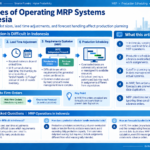
Reasons Why Operating an MRP (Material Requirements Planning) System is Difficult in Indonesia
Material Requirements Planning (MRP) performs requirements expansion based on the Master Production Schedule (MPS) and calculates the net requirements by subtracting inventory. At the same time, it calculates the timing for issuing purchase orders and manufacturing orders by advancing them backward by the lead time. However, due to the impact of manufacturing lot consolidation and lead time adjustments, it becomes difficult to see which requirements (MPS) the generated manufacturing orders are linked to.
Manufacturing lot sizes and manufacturing lead times vary by item, making the task of linking manufacturing orders resulting from MRP requirements expansion to sales orders complex. The production management department often issues instructions for each process outside of the plan, and these unplanned instructions are labor-intensive. The shop floor also finds it burdensome to be bound by instructions despite having target production numbers, and as a result of aligning the intentions of the production management department and the shop floor, operations tend to result in unplanned manufacturing results (without instructions).
The core of MRP lies in the accurate calculation of net requirements, prioritizing requirements calculation over lead time adjustments. To prevent generating excess orders, it links orders that are delayed in delivery by ignoring time constraint violations. However, this makes it difficult to see the linkage between orders.
Since forecast information and confirmed sales orders overlap in periods, it is necessary to consider avoiding double registration in the system. The ideal method to replace forecasts with confirmed orders is to "add only new confirmed orders using the order number as the key and overwrite the forecasts." This prevents double registration of both confirmed orders and forecasts simultaneously.
Compared to the remaining orders, purchase orders, and issued invoices in the actual performance functions, the data management of issued manufacturing instructions (remaining manufacturing) in the planning functions is unclear. Rules are needed, such as confirming manufacturing instructions only from confirmed orders, to ensure that there is no impact on issued manufacturing instructions whenever forecast information is replaced with confirmed orders.
When manufacturing for 7 days' worth of shipments, a manufacturing instruction is issued by consolidating 7 days' worth of shipments of the product, which is the sales order item, into one manufacturing lot. The manufacturing order item to be consolidated becomes the product, which is the output item of the final process. Similarly, when issuing a purchase instruction for 10 days' worth of material requirements as one purchase lot, the output item of the purchase order to be consolidated becomes the material.
-
-
Challenges and Solutions for Operating MRP Systems in Indonesia
Operating MRP systems in Indonesia is challenging due to varying lot sizes and lead time adjustments. Production schedulers help by automating task adjustments.
続きを見る
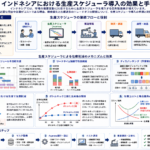
Reducing the Risk of Opportunity Loss and Excess Inventory with Production Schedulers in Indonesia
Factories face issues such as delayed deliveries and excess inventory. These problems stem from the productivity of bottleneck processes, which can be controlled by revising production plans. By maintaining the production efficiency of bottleneck processes at 100%, factories can maximize their production capacity.
Inventory has two meanings: safety stock and a buffer to prevent bottleneck processes from stopping. However, fear of opportunity loss can lead to excess inventory, while fear of inventory costs can result in insufficient inventory.
The introduction of a production scheduler results in improved cash flow through reduced lead times and inventory, and visualization from order receipt to manufacturing and purchasing. However, this requires accurate master data such as component structures, cycle times, and current inventory levels.
Ideally, a single person should create the production schedule for all processes to achieve the greatest effect. Implementing a production scheduler but planning in a relay style with multiple people is counterproductive.
-
-
Effects and Procedures of Implementing a Production Scheduler in Indonesia
Implementing a production scheduler can enhance efficiency at bottleneck processes and improve overall throughput. Asprova aids in automatic schedule…
続きを見る
Multifaceted Profit Management and Production Management to Prevent Delays Sought by Japanese Manufacturers in Indonesia
In the Indonesian manufacturing industry, the division between the sales and shipping departments often leads to an inability to manage backorders, resulting in frequent production based on the manufacturing department's discretion, ignoring the production management department's schedule. The root of this issue lies in the lack of proper product inventory management.
The sales department should ideally collaborate with the production management department to create a standard production plan, instruct the shipping department, and manage the shipping status for order fulfillment. However, when product inventory is insufficient at the time of shipping, customer handling shifts to the shipping department, and the coordination between order fulfillment and shipping schedules is lost. As a result, the manufacturing department produces based on its own judgment, rendering the production management department's schedule ineffective.
To improve this situation, it is crucial to strengthen the collaboration between the sales and shipping departments and to conduct proper inventory management.
-
-
DX Transformation in Indonesian Manufacturing and Analysis of COVID-19 Impact
The first COVID-19 case in Indonesia was confirmed in March 2020, leading to large-scale social restrictions in April. A JETRO survey showed a significant…
続きを見る
Reasons for the Need for Systematization of Production Management in Indonesia
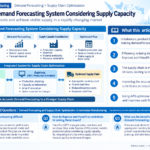
The manufacturing industry in Indonesia is experiencing diversification in consumer preferences due to rising national income from economic growth and the development of information tools centered around social media. As a result, product lifecycles are shortening, and demand forecasting is becoming more challenging. Order quantities are becoming smaller, frequent order changes occur, and these effects ripple throughout the supply chain. Consequently, it becomes difficult to maintain optimal inventory control, leading to a tendency for increased inventory costs.
In the supply chain, there is a trade-off where too little inventory increases the risk of backorders, while too much inventory incurs interest costs. To solve this issue, it is necessary to build a production planning system that considers the supply capacity of in-house production facilities. By considering supply capacity, processes can be seamlessly connected, manufacturing lead times can be shortened, and in-process inventory can be reduced. This results in lower inventory interest costs, an increase in the period cash can be held, and contributes to the company's profitability.
-
-
Case of Supply Chain Optimization in Indonesian Manufacturing
In Indonesia, shorter product lifecycles complicate demand forecasting. Utilizing Asprova and HanaFirst enhances operational efficiency.
続きを見る
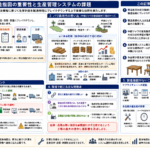
Steps to Systematize Production Management Operations to Transform Efforts on the Indonesian Shop Floor into Company Competitiveness
In the manufacturing industry, the trend towards high-mix, low-volume production is increasing the burden on manufacturing. To manage this with limited equipment, it is necessary to subdivide production lines and increase shared lines to raise the overall operating rate. However, in small-lot production, the lead time for each process becomes shorter, and the frequency of setup changes such as mold changes and cleaning increases, resulting in variability in manufacturing lead times.
This variability makes it difficult to respond to delivery dates, and on the shop floor, it becomes hard to see the linkage with orders and to prioritize. As a result, the rate of meeting delivery deadlines worsens, and to avoid line stoppages due to material shortages, problems of excessive inventory of materials and work-in-progress arise.
In Indonesian factories, the rise in labor costs is one of the challenges. To address this, improving efficiency (reducing man-hours) is important. By shortening the time in the internal supply chain flow from purchasing to manufacturing and shipping, the added value of time and internal resources is enhanced.
However, merely aiming to shorten time is not sufficient. Even if the efficiency of the previous process improves, if the subsequent process cannot cope with it, the inventory of work-in-progress will only increase, and optimizing only one department will not lead to overall optimization. To increase added value, optimization considering the overall balance is necessary.
-
-
Challenges in Indonesian Manufacturing and Systemization Solutions
Indonesian manufacturing faces challenges with high-mix, low-volume production, requiring systemized production planning. Bahtera High System enhances…
続きを見る
Key Points for Marketing and Implementing Production Schedulers in Indonesia
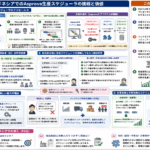
In Indonesia, automating production planning tasks in the manufacturing industry is considered challenging. However, the production scheduler Asprova is utilized and effective across various industries, including automotive parts, consumer goods, and chemical liquid products. Due to the low awareness of production schedulers, it is difficult to convey the value of 'automating production planning tasks.' Therefore, explaining it from the perspective of 'automating worker load planning' is more easily accepted by Indonesian production management personnel.
Production management systems analyze the current situation based on past performance data, while production schedulers repeatedly reschedule using many parameter settings to output the desired results. If a customer asks, 'Can you do this?' and you cannot demonstrate it on the spot, it is the same as saying 'no.'
The factors affecting production planning are complex, and production schedulers are equipped with many properties such as planning parameters, masters, and orders. Even if these are set correctly, it does not necessarily result in an optimized schedule, but rather provides a certain tendency.
Expressing the optimization of production planning can be described as 'a production plan that does not exceed capacity, has no delivery delays, and levels the operating rate.' However, in countries like Indonesia, which are susceptible to demand fluctuations, currency fluctuations, and disruptions in logistics networks, the definition of optimization changes according to the market environment. Simulations are conducted with production schedulers to approach what is optimal for the factory.
In Indonesia, there is a strong tendency to focus on human management rather than deadlines or costs in manufacturing, reflecting the deeply rooted human-centric business practices. This may be influenced by the relatively recent history of parliamentary democracy, established after the fall of the Suharto regime in 1998, through democratic elections and constitutional amendments, establishing civilian control and the separation of powers.
Additionally, foreigners are prohibited from engaging in personnel work, and under the founding principles of Pancasila, which emphasize ethnic diversity, the philosophy that only Indonesians can evaluate Indonesians is reflected.
-
-
Challenges of Asprova Production Scheduler in Indonesia
Asprova production schedulers face low recognition in Indonesia, requiring presentations to start from a negative position. They offer capabilities beyond…
続きを見る
Challenges in Issuing Manufacturing Orders and Inputting Results in Production Management Systems in Indonesia
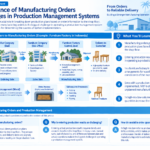
Manufacturing orders are a crucial element for materializing production plans based on order information on the shop floor. Inputting results against manufacturing orders is the biggest challenge in operating a production management system and serves as a major criterion for determining the success or failure of system implementation.
To issue manufacturing orders and input results while clearly maintaining the link between order information and production plans, it is necessary to utilize the MRP function of the production management system. Issuing manufacturing orders using Excel can easily lead to discrepancies with the shop floor and often results in unclear links with order information.
-
-
The Importance of Manufacturing Orders and Challenges in Production Management Systems
Manufacturing orders are crucial for breaking down production plans to the shop floor. Entering production results is a major challenge in production…
続きを見る
Extension of Asprova Functions through COM Interface
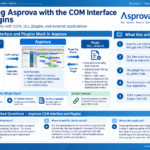
The Asprova main body provides hooks to execute plugins at the timing of event occurrence. The plugin key, which is an access point representing this event, corresponds to the do_action or apply_filters hooks in WordPress. This allows for flexible extension of Asprova's functions.
The relationship of middleware and components until accessing the DB through ADO is similar to the process of shipping cargo from a Shipper to a Consignee via sea transport.
To access RDB, Excel, or Texfile (Consignee) from a development application program (Shipper), you request procedures from an intermediary (Forwarder) called the OLE DB data provider. However, since directly dealing with OLE DB is cumbersome, you entrust it to ADO (Cargo Handler).
In this way, by utilizing the COM interface, it is possible to efficiently extend Asprova's functions and collaborate with various data sources.
-
-
Details of Asprova's COM Interface and Plugin Extensions
Asprova can enhance its capabilities using the COM interface and plugins. DLL files should be located in the same directory as the Asprova executable.
続きを見る
Impact of Production Scheduler Performance on Task and Order Status
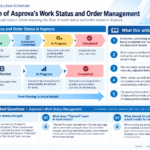
In the production scheduler Asprova, tasks have fixed date levels and fixed quantity levels. When tasks are manually moved, the fixed date level becomes 10, and rescheduling pulls adjacent tasks closer. Additionally, when actual quantities are entered for a task, the fixed date level becomes 40, and rescheduling overwrites the planned quantities of subsequent tasks with the actual quantities.
This allows real-time reflection of task progress and enables efficient production management.
As a specific case, there is an instance where a worker on a production line manually adjusted tasks, resulting in improved overall production efficiency.
Thus, by utilizing Asprova, flexible adjustments to production plans are possible.
-
-
Detailed Explanation of Asprova's Work Status and Order Management
This article provides a detailed explanation of Asprova's work status and order management. It covers the stages of work status, order status changes, and…
続きを見る
How to Reflect Constraints Such as Molds and Workers in the Production Schedule of Equipment
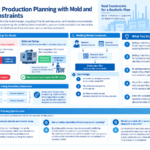
Capital investment cannot be executed immediately, but reassignment or new hiring of workers can be handled flexibly at low cost. This makes it important in factory management to increase the operating rate of main resources through worker capacity planning.
If the mold changeover time is set as the setup time for the main resource, it becomes an internal setup. Setting 120 minutes for the main resource's setup time and 0 for the sub-resource's setup time will stop the machine for 120 minutes of internal setup time.
On the other hand, if the mold changeover time is set as the setup time for the sub-resource, it becomes an external setup. Leaving the main resource's setup time blank and setting 120 minutes for the sub-resource's setup time will allow the machine to continue operating during the 120 minutes of external setup time.
-
-
Optimization of Production Planning with Constraints of Molds and Workers
The optimization of production planning involves managing constraints from molds and workers. Setting mold change times and adjusting worker resources are…
続きを見る
Differences in Production Plans for Assembly and Process Systems Created by Production Schedulers
In process-based manufacturing processes, a continuous line is used, so operations in the current process and the next process are carried out consecutively. As a result, there is no downtime, and tasks from other orders do not interrupt. This is achieved by enabling 'Overlap MAX' in the planning settings and setting 'Overlap MAX' to 0 in the manufacturing BOM.
Additionally, in process-based manufacturing processes, tanks are often used. There is a constraint where you do not want to assign other orders to the tank while waiting for the preparation work in the tank to be completed and flow to the next process. This can be addressed by enabling 'Resource Lock' in the planning settings and setting PE in the 'Resource Lock' of the resource table.
Thus, there are unique constraints in process systems, making planning settings crucial.
-

-
Efficiency Improvement and Constraint Management in Manufacturing Processes Using Asprova
Using Asprova can enhance efficiency and manage constraints in manufacturing processes. Assembly-type processes are easier to standardize, while…
続きを見る
Production Planning Considering Raw Material Inventory Constraints Created by Production Scheduler
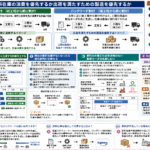
By using the production scheduler Asprova, you can prioritize production plans starting with orders that have raw material inventory. Specifically, during backward allocation, "among the replenishment orders generated from customer orders, those linked to purchase orders or outstanding orders other than inventory" are allocated first. As a result, orders linked to inventory are naturally allocated last, creating a plan that prioritizes production from orders with material inventory.
This method streamlines inventory management and helps avoid unnecessary production.
-
-
Optimization Methods for Production Planning in Indonesian Manufacturing
This article discusses methods for optimizing production planning in Indonesian manufacturing, focusing on forward and backward allocation strategies and…
続きを見る
Standard Cost Calculation Possible with Production Scheduler Asprova
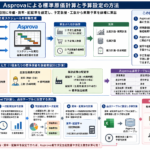
In Asprova's item table, you can set raw material unit prices, wage rates, and allocation rates as breakdowns of cost items. However, Asprova itself does not have the function to automatically calculate wage rates or allocation rates from the fixed cost budget. Therefore, it is necessary to set the results calculated externally using Excel into the item table.
This method allows for efficient standard cost calculation.
-
-
Methods for Standard Cost Calculation and Budget Setting with Asprova
Asprova enables automatic generation of production schedules and detailed budget setting based on sales forecasts by calculating standard costs per unit by…
続きを見る
Demo video | Asprova × Solver8 for Indonesian factories
Production scheduler Asprova is an APS that automatically builds feasible schedules from real factory constraints such as equipment capacity, setups, and mold/jig limits. This demo assumes deployment in an Indonesian factory and walks through Data Bridge (MC-Frame integration), standard scheduling vs. AI logic Solver8, and Schedule Viewer for cross-department sharing, actuals entry, and rescheduling. Use it to connect the hub topics—setup vs due dates, load planning, and PSI tables—to the live screens.
- Build an executable schedule after MRP, including equipment load balancing and setups
- Molding changeovers (example: 30 minutes) and bottleneck-first optimization
- How Solver8 (~300,000 improvement iterations) balances due dates and setup reduction
- Share Gantt charts, utilization, and PSI tables in Schedule Viewer, then reschedule after delays
Asprova × Solver8 demo for Indonesian factories (YouTube)
FAQ | Production Scheduler and APS
We organize the recurring points discussed in the Asprova Hub according to the knowledge in the main text.
What is the difference between MRP and APS (Production Scheduler)?
MRP is a planning framework that expands the requirements for parts and resources based on demand. APS allocates tasks on a timeline considering equipment, setup, and constraints, handling finite load leveling and dispatching.
How do you differentiate between infinite capacity loading and finite capacity leveling?
Loading visualizes the load, while leveling smooths it within capacity. To meet delivery dates, setups, and alternative resources, adjustments on the finite load side combining rules and simulations are necessary.
What are the key points to focus on when implementing in Indonesia?
Connecting plans and actual results, issuing manufacturing orders and entering actual results, and incorporating constraints such as molds and operators. In sales and implementation, agree on the shop floor bottlenecks and evaluation indicators (objective functions) first.