


With the advancement of Kintone and AppSheet functionalities, it is becoming possible to internalize business systems in Indonesia. It is considered more advantageous to reform business operations fundamentally through IT by internalizing rather than outsourcing.
-
-
Production Management Systems in Indonesia
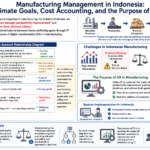
The ultimate goal in manufacturing is to improve productivity and meet delivery deadlines. Understanding the differences between manufacturing cost, cost of…
続きを見る
What this article covers
- The advancement of Kintone and AppSheet is facilitating the internalization of business systems in Indonesia.
- In Japanese factories in Indonesia, Excel is commonly used for data management, but its limitations are becoming apparent.
- The introduction of systems utilizing MES and IoT has significantly improved operational efficiency in Indonesian factories.
- In Indonesia, system outsourcing is common when there is a lack of skilled IT personnel.
- Using Google's AppSheet, a performance management system with input from smartphones can be constructed.
Business Practices are Continuously Evolving
In Japanese factories in Indonesia, it is common to use Excel for internal business data management and report creation. The advantage of Excel lies in its ability to flexibly change formats with embedded formulas, allowing operations to be conducted in the optimal format needed at the time. It can be said that individuals are making small daily improvements to their work.
Business operations are established through the interrelation of individuals, and as customers and suppliers increase, the way business is conducted also changes. Therefore, Excel is modified and adapted, but there are limits, such as files taking a long time to open due to too many formulas, and data being dispersed across individual PCs, making it time-consuming to consolidate.
In such situations, the introduction of systems is considered to visualize internal operations, share information, and systematize the processing of information to make it useful. By systematizing and operating the connections of business processes that have matured at the individual level over many years, it becomes more convenient and easier compared to the era of using Excel. However, as business practices continue to change with environmental changes, system modifications, or business improvements, will be necessary in a few years.
Issues of IT System Outsourcing and In-house Development in Indonesia
In Indonesia, unlike Japan, it is common to outsource IT systemization to IT service companies like ours due to the lack of personnel in the information systems department. Even relatively small companies may internalize if they have highly skilled Indonesian IT personnel. However, Japanese expatriates in such companies often express concerns like "The system was created by a single knowledgeable Indonesian, so we don't understand its contents, and we worry about what will happen after they leave."
- The weakness of outsourcing is the difficulty in adapting to changes in business flow due to environmental changes.
- Even if internalization is attempted, there may be no personnel with IT skills within the company.
- Systems developed by skilled IT technicians tend to become personalized.
The issues of IT system outsourcing and in-house development in Indonesian subsidiaries are summarized in the above three points. As a result, not only does business efficiency decrease due to the inability to see the current situation, mismatched numbers, and disconnected processes, but it also leads to a decline in employees' awareness of sales costs.
Case Study: The ideal of business improvement through IT systems in Indonesia is "a system that can be flexibly modified like Excel to adapt to environmental changes, and can be built by internal business personnel without advanced IT skills." However, such convenient IT tools did not exist, so outsourcing was inevitable, but with technological advances, it is becoming possible to make realistic proposals.
Key Point: The ideal of internalization is flexibility that allows shop floor personnel to make changes without advanced IT.
-
-
Key Points for Optimizing Business Systems in Indonesian Factories
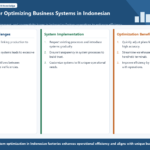
Optimizing business systems in Indonesian factories addresses issues of visibility, alignment, and connectivity, enhancing operational efficiency. A phased…
続きを見る
Performance Collection System Using Google AppSheet from Smartphones
Our company provides support for both outsourcing business systems and internalizing them using Google Sheets and AppSheet for Indonesian companies. One example is supporting the introduction of a performance management system using AppSheet for inputting results from smartphones against work schedules generated by the production scheduler Asprova.
Production Scheduler Operation Configuration

In Indonesian factories, it is common to operate on a tight schedule to recover customer shipping schedules due to insufficient product inventory at the time of shipment. Monthly confirmed order quantities from customers are delivered according to a shipping schedule divided by day, but order backlog management is conducted mainly by the shop floor, leading to separation of orders, procurement, production, and shipping.
The production scheduler aims to streamline this process and improve inventory reduction and resource operation efficiency. The operation method involves linking with existing ERP system masters and performance information or separating only the minimum necessary information as a separate system, constructing a system centered on the production scheduler.
DX Transformation Required During the COVID-19 Pandemic

The purpose of systemizing operations is labor-saving, efficiency, and error prevention, but the purpose of DX transformation is not merely replacing existing systems but business reform using IT. During last year's COVID-19 pandemic, Taiwan's Digital Minister Audrey Tang developed the "Mask Map" app, which allows real-time checking of mask inventory.
This was not because cutting-edge technology was adopted, but because a system that could be quickly operated using OSS was built, which was highly evaluated. Similarly, in general companies, business reform requires operational reform on the shop floor, and in Indonesia, we propose incorporating smartphones into business to create a system where operations can flow easily anytime, anywhere.
System Configuration

This time, instead of building a system in-house, we realize "DX that can be done from today" by using Google's free cloud services, Google Sheets, and AppSheet. Data exchange between the ground production scheduler and Google is done using CDATA's ODBC driver.
First, create work instructions with Asprova and upload them to Google Sheets using CDATA's ODBC driver. Next, from the smartphone screen created with AppSheet, input performance (call up work instructions with QR codes) and download the performance from Google Sheets to Asprova using CDATA's ODBC driver.
Connecting Asprova to Google Sheets via ODBC

When you install CDATA's ODBC driver, CDATA ODBC driver for Google Sheets appears in the Windows ODBC settings screen. By setting necessary items such as Folder Id and SpreadSheet, the columns of Google Sheets will be displayed.
CDATA's ODBC driver can be easily connected like normal ODBC settings, and the one-month free period is sufficient to verify practicality.
Launching AppSheet from Google Sheets to Create Smartphone Screens

Upload the work instructions generated by Asprova to Google Sheets and input performance into it. Although you can write directly to Google Sheets, this time we create an app for performance input from smartphones using AppSheets.
AppSheet is a no-code app development tool provided by Google that allows anyone to develop systems without programming, and it can easily create an interface for writing to Google Sheets cells from smartphones. This time, by clicking on the work instructions displayed on the calendar on the smartphone, specific work instructions are called up, and performance is input.
For connection to Google Sheets, CData Software's CData Google Sheets ODBC Driver is used to achieve data exchange with ETL (Extract, Transform, Load) and BI tools via standard ODBC.
Frequently Asked Questions | In-house Business Systems in Indonesia
Based on the content of this article, we summarize frequently asked questions briefly.
What are the advantages of in-house business systems in Indonesia?
In Indonesia, the advantage of in-house business systems is the ability to flexibly respond to environmental changes. Especially by using tools like Kintone and AppSheet, it becomes easier for shop floor personnel to build systems without high IT skills, leading to improved efficiency and labor-saving.
What are the issues with outsourcing business systems in Indonesia?
In Indonesia, due to the lack of personnel in the information systems department, outsourcing is common, but there is a problem of difficulty in adapting to changes in business flow due to environmental changes. Additionally, outsourcing can lead to a lack of understanding of the system's contents and a risk of personalization.
What are the benefits of system development using AppSheet?
AppSheet is a no-code tool that allows anyone to develop systems without programming. This enables performance input from smartphones in conjunction with Google Sheets, improving business efficiency. The major benefit is that shop floor personnel can easily build systems.