


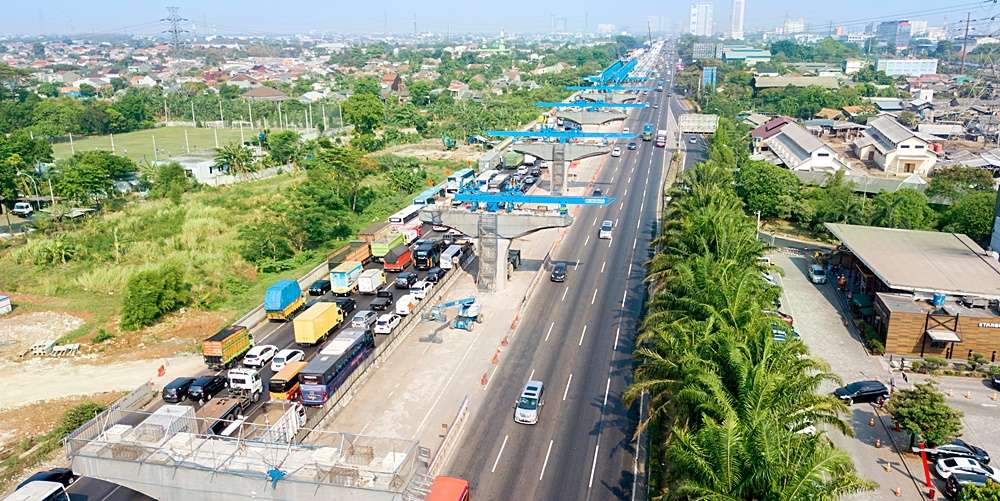
Digital transformation (DX) in Indonesia's manufacturing industry can be highly effective when initiated through paperless operations by digitizing daily production reports. This approach helps reduce on-site errors and transcription omissions, enables real-time information sharing, and promotes cultural transformation and continuous improvement through the use of intuitive tools like i-Reporter.
-
-
Production Control System in Indonesia
It’s not limited to Indonesia, but it’s often said that the ultimate goals of the manufacturing industry are twofold: "cost reduction through productivity improvement" and "delivering products on time without delays." From a management perspective, business plans are crafted to maximize growth based on market supply and demand adjustments. However, even if sales increase due to low pricing, it only reduces gross profit, leading to losses from selling and administrative expenses or non-operating costs. On the other hand, raising unit prices isn’t straightforward due to market price considerations. Therefore, process management based on production plans aimed at reducing costs through ...
続きを見る
Starting with Paperless Operations Brings High ROI for Manufacturing DX in Indonesia
In recent years, digital transformation (DX) in the global manufacturing industry has progressed rapidly. Among ASEAN countries, Thailand and Vietnam are seeing significant on-site DX advancements, driven by government-led smart factory initiatives that embody Industry 4.0—leveraging IT technologies like IoT to improve productivity and quality.
Indonesia is also promoting its own initiative, “Making Indonesia 4.0,” which aims to enhance the added value and international competitiveness of its manufacturing sector through DX. However, despite the presence of over 800 Japanese manufacturing companies in the country, digitalization at the shop floor level remains in its early stages. In many small- to medium-sized factories, paper-based daily production reports and Excel spreadsheets are still common, and some sites have yet to achieve even basic “visualization” of data.
Amid these challenges, a growing number of Indonesian manufacturers are beginning DX efforts with reforms centered around the digitization of daily production reports. This approach is highly effective, as the essence of DX is said to be "continuous improvement through data utilization that connects the shop floor and management." The push for paperless and IoT solutions was further accelerated by the need to minimize physical contact and sharing of materials in post-COVID production sites.
Here’s why I believe starting with paperless operations offers the highest implementation benefits for DX in Indonesian manufacturing:
- It reduces common issues in Indonesian manufacturing sites such as data entry mistakes, Excel transcription omissions, and time losses.
- Since daily reports are used every day, their impact on the entire shop floor is significant.
- They consolidate key information like production results, anomalies, and defects.
- With cloud integration, real-time data sharing and analysis become possible.
Although “paperless” has been advocated for decades, the reason handwritten forms and manual Excel input have persisted is simple: entering data into tablets and other digital devices has generally been less user-friendly than writing with a pen on paper.
Manufacturing Site Reform in Indonesia Using i-Reporter

Just like the Indonesian slang “KEPO” (Knowing Every Particular Object), which reflects the nation's curiosity and eagerness for new things, the introduction of tablets on the shop floor should not have been a barrier. However, the inconvenience compared to paper-based workflows hindered paperless adoption. i-Reporter overcomes this by providing an interface that feels just like working with paper, allowing intuitive use on tablets.
With tablets installed on the shop floor, it becomes easy to digitize and immediately input, transmit, and store work records, daily reports, inspection logs, and more. Indonesian staff can enter operational and defect data on the spot, and that data is shared with managers in real time.
While improved digital awareness among field workers is a major achievement, the digitization of daily reports using i-Reporter is not just a “tool replacement.” It leads to a transformation of workplace culture itself, enabling visualization and accelerating improvement activities based on accumulated data.
Digitizing daily reports is a highly effective small start for DX. Before making large investments in IoT-enabled equipment or AI-based analytics, changing everyday routines is the first step toward involving the entire organization. In Indonesia especially, where IT literacy varies and paper-based practices remain deeply rooted, tools like i-Reporter that are designed with field operators in mind help significantly lower these barriers.
For Japanese manufacturers operating in Indonesia, digitizing daily reports is not just about improving operational efficiency. It serves as a foundation for real-time “visualization” that connects the shop floor with management. This in turn leads to enhanced traceability, quality improvement, equipment maintenance, and other DX-related initiatives. Most importantly, the key to success lies in gaining the understanding and participation of Indonesian staff.